
Background Image

Our Advocacy

Alliance of Councils for Albury Wodonga Region Health Services

Established in January 2025, the Alliance of Councils for Albury Wodonga Region Health Services (the Alliance) brings together 13 member councils from across the Victorian and New South Wales border and North East region.

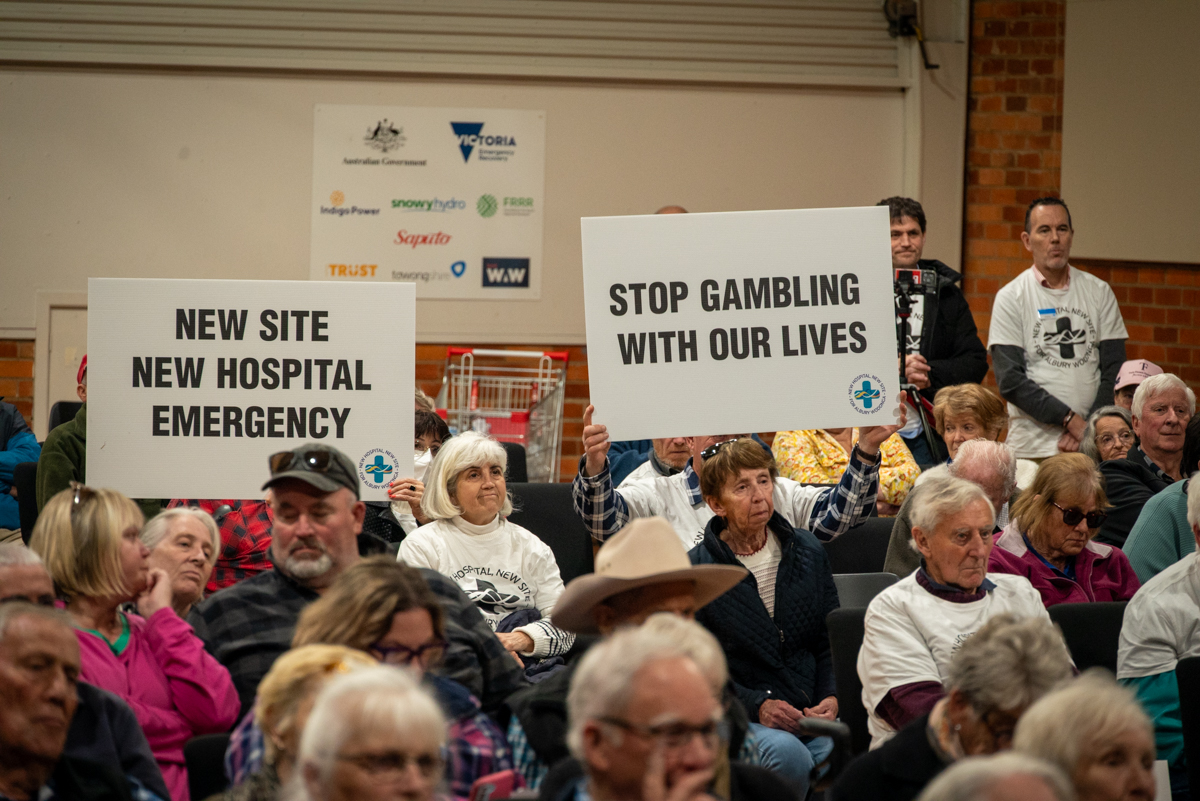
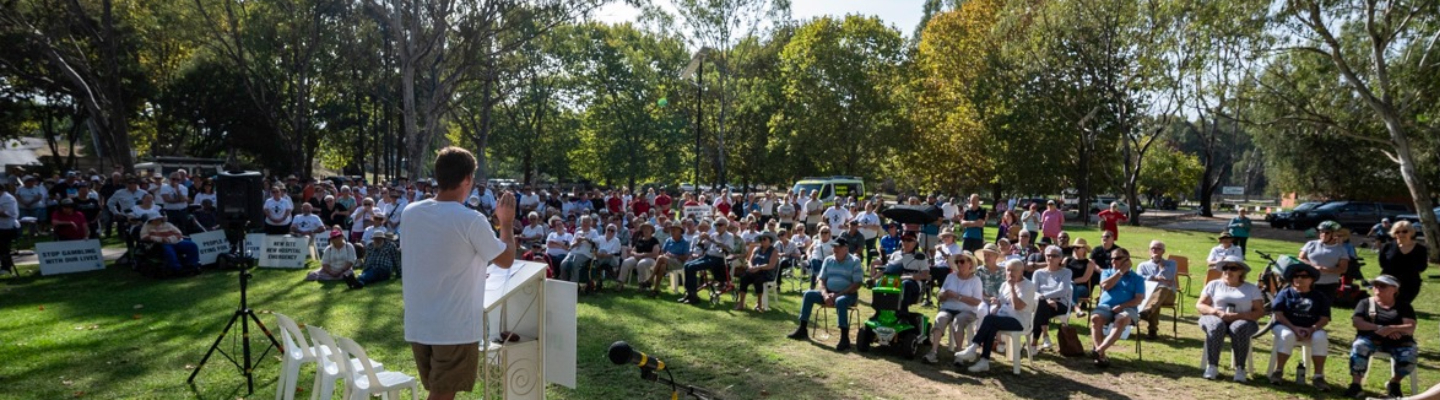
The Alliance exists to advocate for a health system that is fit-for-purpose, properly funded and capable of meeting the current and future needs of our communities. Working collectively, member councils represent one of the largest inland populations in Australia and speak with a united regional voice on the urgent need for a new hospital on a new site.

The Alliance seeks collaboration with all levels of government, healthcare partners and community members to ensure equitable, long-term healthcare outcomes for the region.

Latest News

Key updates from across the Alliance.

  • Alliance Chair Michael Gobel attended online meeting with NSW Deputy Secretary for Regional Health and Victorian Health Secretary.
  • Formal letter, requesting an urgent pause and reset to enable delivery of a new hospital solution, sent to NSW Deputy Secretary for Regional Health and Victorian Health Secretary.
  • The Alliance agreed to engage a strategic advisor, with revised scope to be presented at a future meeting.
Find out more

23 March 2026

Alliance Chair Michael Gobel responds to the executive leadership change at Albury Wodonga Health.

"The change in leadership at Albury Wodonga Health, while significant, does not alter the Alliance's position or objectives. We remain clear in our advocacy for a new hospital on a new site, alongside stronger and sustained investment in health services across our region.

"We continue to listen closely to our community and healthcare workers, who are calling for a new, fit-for-purpose hospital that can meet current and future demand. The redevelopment delivers neither the short- or long-term solutions we need, and is certainly not a ‘gamechanger’, as portrayed by Minister Thomas. We also acknowledge and thank the dedicated staff across AWH who continue to deliver care for our community, particularly through this period of change.

"We stand alongside our regional partners in this advocacy, united in seeking better outcomes for our region. The Alliance has always been open in its intent to work constructively with the AWH Board and Executive team and remain committed to doing so to achieve better health outcomes for our community."

Members

Victorian Councils

  • Alpine Shire Council
  • Benalla Rural City Council
  • Indigo Shire Council
  • Moira Shire Council
  • Towong Shire Council
  • Wangaratta Rural City Council
  • Wodonga Council

New South Wales Councils

  • Albury City Council
  • Berrigan Shire Council
  • Edward River Shire
  • Federation Council
  • Lockhart Shire Council
  • Murray River Council

Our Advocacy Focus

The Alliance’s advocacy is centred on a clear priority:

The delivery of a new Albury Wodonga regional hospital on a new site that is fit for purpose, sustainable and scalable to the region it serves.

To support this outcome, we are also advocating for:

  • A tri-partite funding commitment from the Australian, NSW and Victorian governments
  • Sustained operational funding to ensure a new hospital is properly staffed, equipped and resourced
  • Short-term operational relief to address immediate capacity pressures while planning progresses

Our communities deserve a hospital that meets today’s needs and tomorrow’s growth. The case for a new hospital on a new site is clear, evidence-based and urgent.
Alliance advocacy timeline

March 2026
  • Alliance Chair Michael Gobel attended online meeting with NSW Deputy Secretary for Regional Health Luke Sloane and Victorian Health Secretary Jenny Atta to discuss the future hospital solution.
  • Formal letter, requesting an urgent pause and reset to enable delivery of a new hospital solution consistent with the 2021 Clinical Services Plan, sent to NSW Deputy Secretary for Regional Health Luke Sloane and Victorian Health Secretary Jenny Atta.
February 2026
  • The Alliance agreed to engage a strategic advisor, with revised scope to be presented at a future meeting, in support of current and future advocacy work. Members discussed recent advocacy activity, including the Victorian Minister for Health's visit to Wodonga’s Emergency Relief Centre and inadequacy of the latest Clinical Services Building design released by Health Infrastructure NSW in January. It was determined that an Alliance letter be sent to relevant state and federal members, reiterating Alliance concerns about the proposed redevelopment.
  • Letter reinforcing the Alliance’s collective advocacy sent to Victorian and NSW Ministers for Health, Maryanne Thomas and Ryan Park, repeating their call for the ministers to meet.
January 2026
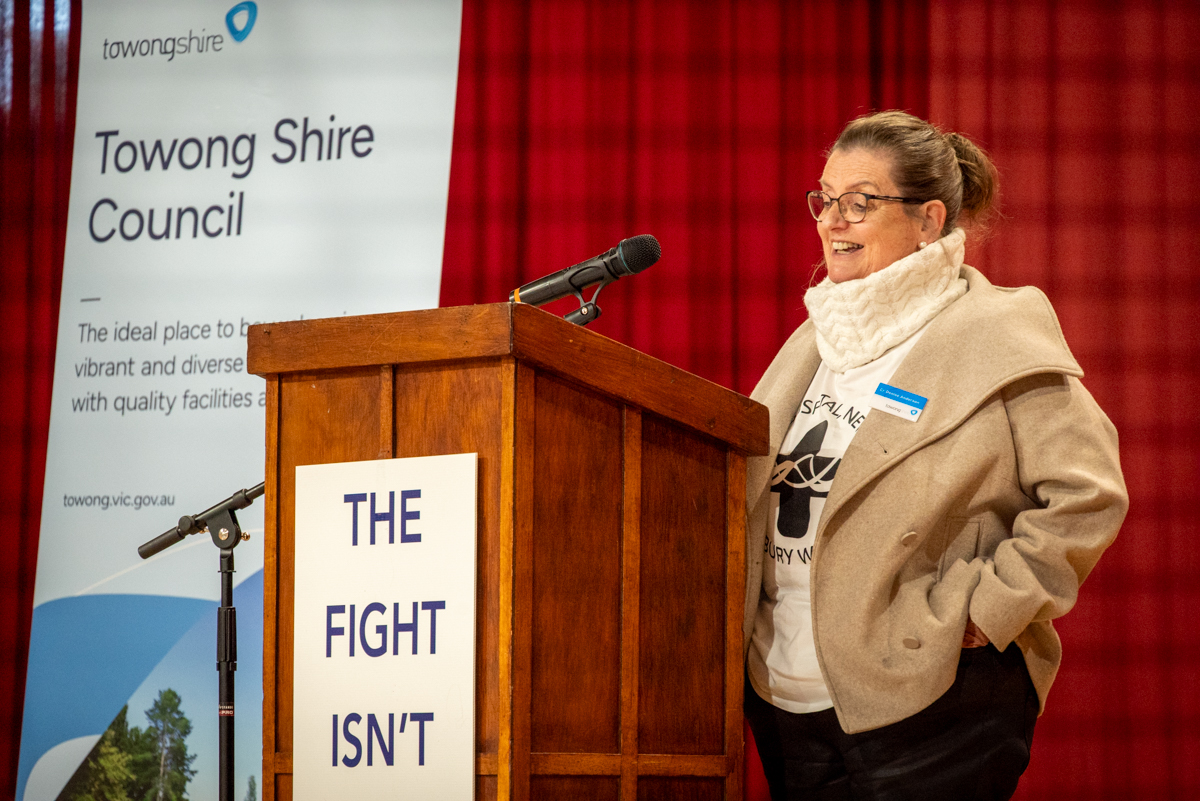
  • Victorian Minister for Health, Maryanne Thomas visited Wodonga’s Emergency Relief Centre, meeting with representatives including Wodonga’s Mayor Gobel as well as Towong Shire’s Deputy Mayor Anderson. Conversation focused on the emergency fire situation, but Councillors Gobel and Anderson reiterated importance of adequate healthcare in the region. The Alliance recognises the important role Albury Wodonga plays in supporting the region amidst increasingly prevalent emergency situations.
  • Health Infrastructure NSW released detailed designs for the Clinical Services Building. Mayors Gobel and Mack responded on behalf of the Alliance, expressing serious concern about lack of genuine detail and the renders didn’t produce a realistic way forward for our community’s healthcare needs.
  • + The case for change
    A region that has outgrown its hospital

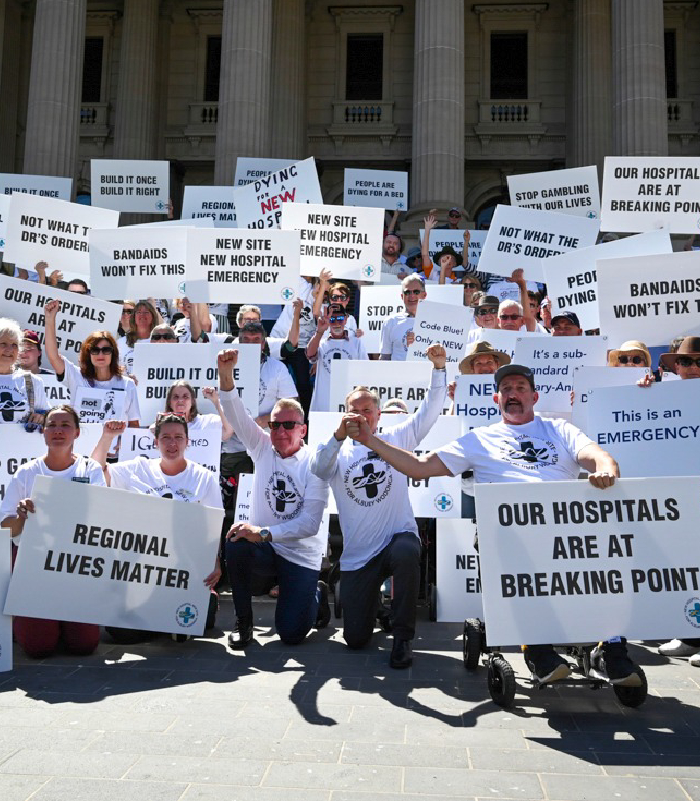
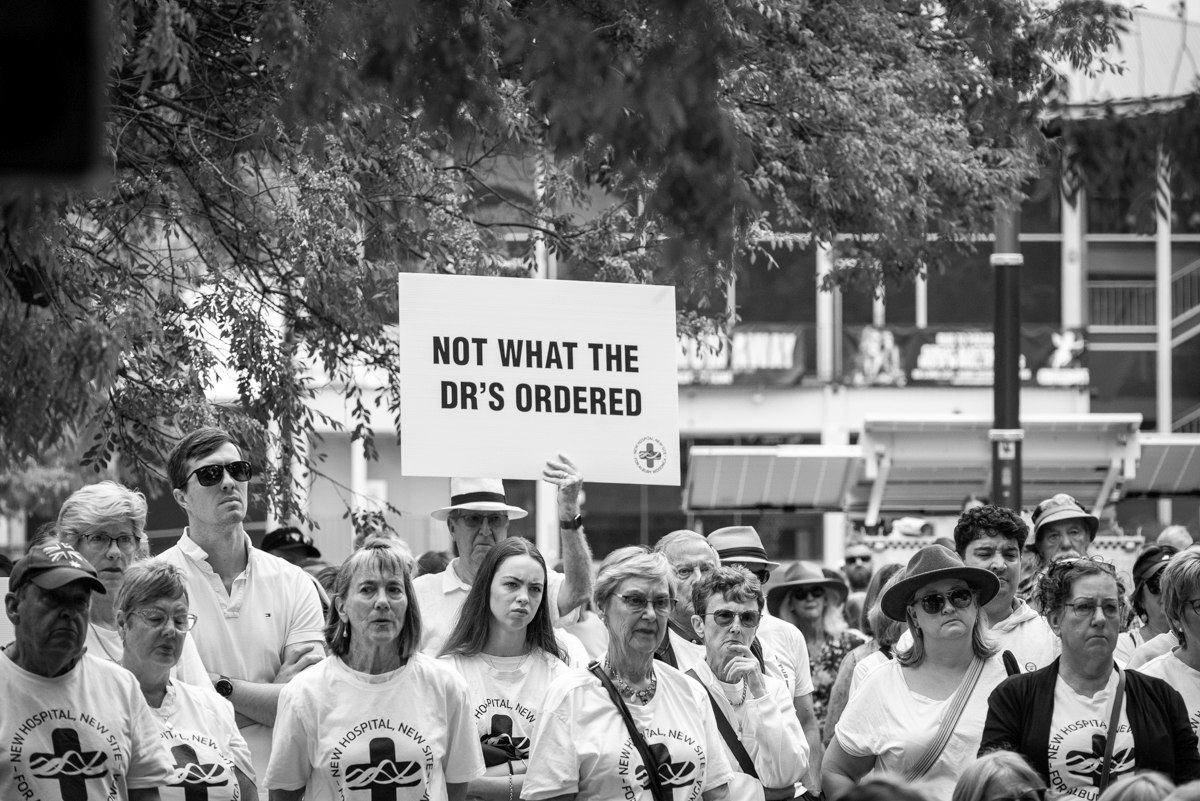
    Our region faces a critical healthcare crisis as a result of inadequate hospital infrastructure and a systemic failure in rural and regional health funding.

    Despite being one of the largest inland population centres in Australia, comparable in size to Bendigo and Ballarat, Albury Wodonga Health (AWH) does not have a hospital that can meet current demand, let alone future growth.

    The primary issue is clear:

    The region needs a new, fit-for-purpose hospital on a new site.

    Redeveloping the existing Albury Base Hospital will not deliver the scale, capacity or flexibility required for decades to come.

    An aging site that cannot meet demand

    The current hospital site is constrained, outdated and unable to support the level of expansion required to safely serve the region. As a result, AWH operates well beyond safe limits daily, creating pressure across emergency care, inpatient services and elective surgery.

    Key statistics:

    • Daily hospital occupancy rates of 110 to 125%, far exceeding the safe operating threshold of 85%
    • Daily bed shortages of 30 to 70 beds
    • Ambulance ramping and emergency department congestion
    • An elective surgery waiting list of approximately 3000 people, the largest in regional Victoria outside metropolitan hospitals

    These pressures are structural, not temporary.

    A hospital that does not match the size of its region

    AWH is the largest regional health service between Sydney and Melbourne, yet its infrastructure is significantly smaller than comparable centres.

    Key statistics:

    • 272 acute inpatient beds, compared with 460 in Bendigo and 407 in Ballarat
    • Fewer beds than smaller regional centres including Wagga Wagga, Tamworth, Orange and Lismore
    • Only 9 dialysis chairs, compared to 24 in Wagga Wagga

    This gap in infrastructure is a primary driver of overcrowding, long waitlists and system stress.

    The human cost

    Behind these statistics are real and distressing consequences for people across our region.

    • Ambulances ramped for hours, leaving communities without emergency coverage
    • Towns such as Corryong experiencing up to 16 hours without ambulance coverage
    • Families driving loved ones to hospital during medical emergencies due to ambulance delays
    • Residents choosing to forgo or cease treatment rather than leave their community
    • Elderly patients discharged late at night without transport or support
    • Delayed diagnoses, poorer health outcomes and preventable deaths
  • + Why the brownfield redevelopment is not the answer

    The proposed redevelopment of Albury Base Hospital does not resolve the underlying problem; the site itself cannot accommodate the hospital the region needs.

    The current proposal:

    • Adds only 35 additional acute beds, less than the existing daily shortfall and far short of the estimated 150 to 200 additional beds needed
    • Will take years to deliver while demand continues to increase
    • Has been described as clinicians as “the expensive option that buys us more of the same”
    • Ignores the 2021 Clinical Services Plan and evidence-based masterplan developed with clinicians, health care workers, government representatives and the community
    • Risks locking the region into inadequate infrastructure for decades to come
  • + The better solution

    The 2021 AWH Master Plan recommended a new hospital on a new site.

    A greenfield development is the only option that can deliver:

    • Capacity that meets current demand and future population growth
    • Modern, flexible infrastructure designed for contemporary healthcare delivery
    • Sufficient beds and services to meaningfully reduce waitlists and overcrowding
    • A hospital that reflects the region’s role as a major inland health hub

    This approach enables proper long-term planning, staged expansion and modern clinical design; outcomes that are not achievable on the current constrained site.

    There is strong precedent for this approach. In Shellharbour, NSW, a coordinated campaign by councils, clinicians, communities and MPs successfully secured a greenfield hospital after an initial brownfield proposal.

  • + Cross border complexity

    AWH operates under a unique intergovernmental arrangement between NSW and Victoria. While both states share responsibility, the current model is not fit for purpose.

    Key issues include:

    • Planning certainty limited to 10-year cycles, undermining long-term infrastructure planning
    • An accountability gap that allows responsibility to be deflected between governments
    • Neither state treating AWH as genuine funding priority
  • + Supporting the new hospital with sustainable funding

    While the primary need is a new hospital on a new site, it must be supported by sustainable operational funding to function safely and effectively.

    Across rural and regional Australia, per-capita health spending decreases with distance from capital cities, creating a “postcode penalty”. This has a direct impact on staffing, service availability and patient outcomes.

    For Albury Wodonga, inadequate operational funding compounds the pressure created by insufficient infrastructure. Addressing both is essential, but without a new hospital, funding alone cannot solve this crisis.